
5 Signs You Need Business Support (Even If You Think You're Managing Fine)
Nothing is going wrong. That is what makes this one hard to act on.
The revenue is there, the clients are happy, and if anyone asked you would say things are busy but fine. Fine is doing a lot of work in that sentence. Underneath it, you are the reason everything holds together, and you have quietly started doing the sums on how long that can carry on.
The signs you need business support are rarely loud. They arrive as a process that takes twice as long as it should, a decision that has moved to next week four times running, a system you have been meaning to build since February. There are five below, and they are deliberately five different kinds of sign rather than five versions of "you are busy". Read them as a set. It is the combination that tells you where you actually are.
Sign 1: the same job is new every time
A client signs. Instead of the good feeling, you get the weight of what comes next: finding the last contract, copying an old welcome email, working out which folder the questionnaire ended up in.
This is a process sign. The work repeats but the process does not, so every instance costs you a fresh set of small decisions. It also sets a ceiling you did not choose. The number of clients you can take on is capped by the number of first weeks you personally have the capacity to run.
Sign 2: the important work is always next week
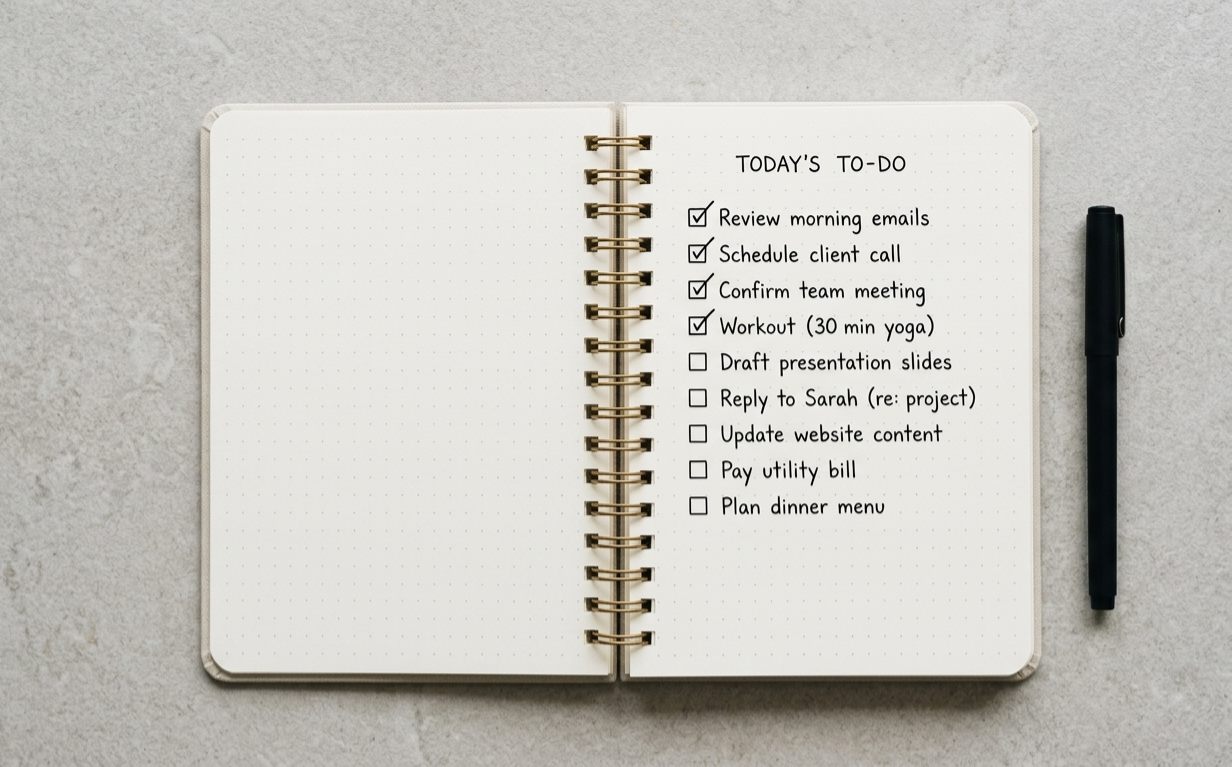
Not ordinary busyness. This is the version where the list is longer on Friday than it was on Monday, and the items that keep moving are the ones that would have made next month easier. The process you meant to write down. The tool you meant to set up. The offer you meant to launch.
This is a time sign, and the direction of travel is the point. Reactive work is not only taking your hours, it is also taking them from the work that would reduce the reactive work. That is why it compounds rather than levels off.
Sign 3: a fortnight away is not survivable
Ask it plainly. If you were unreachable for two weeks, what would still be moving when you got back?
For a lot of established businesses the honest answer is "not much", and the reason is that the operating knowledge was never written down. It is in your head, where it works perfectly, which is exactly why it never got written down.
This is a risk sign, and it is the one that reads as control until you look at it properly. A business that depends on one person's memory has a very short recovery time. That is a different thing from a business under control, and only one of them is worth having.
Sign 4: the answer is in four places
A project tool you half use. A CRM set up last year and not opened since. An inbox holding the actual client history. A spreadsheet for whatever the other three do not cover.
This is an infrastructure sign. Disconnected tools never announce themselves as a cost. They just add a small tax to every question you ask of your own business, and you pay it so often you stop noticing. The business operations help a small business needs at this stage is rarely another tool. It is the right ones, set up properly and connected, so there is one place where a thing is true.
Sign 5: you know exactly what to do and it is still not done
The same line has been on your action list for three weeks. You know the CRM needs building. You know onboarding needs documenting. You are not confused about the answer.
This is a capacity sign, and it is the most misread of the five, because from the inside it looks like a discipline problem. It is not. Knowing what to build and having the uninterrupted hours to build it are two different resources, and running a business consumes the second one first.
When to hire an online business manager
When more than one of those is true at the same time, and particularly when sign 5 is one of them.
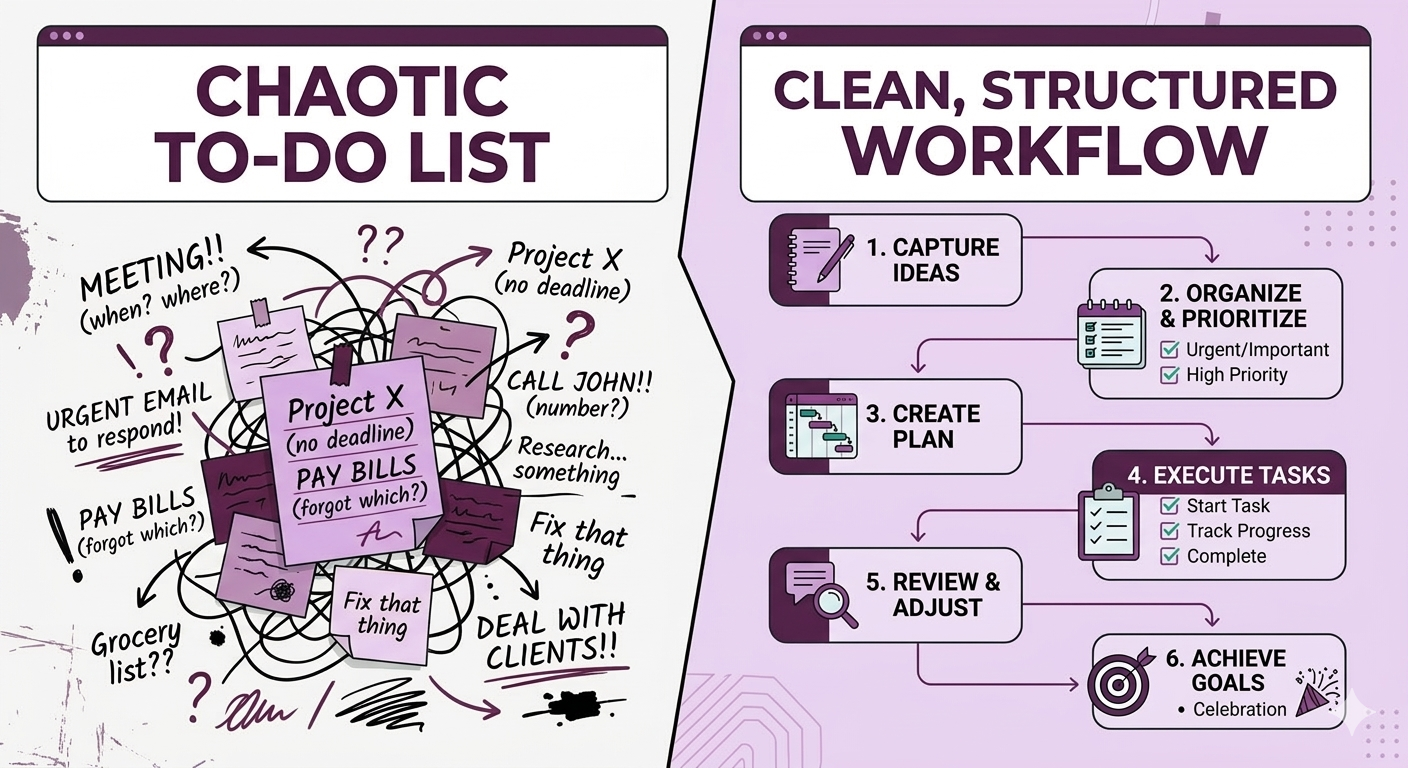
A single sign usually has a small fix. Several at once is a structural read: the business has grown past what one person can hold, which is a good position to be in and a poor one to leave alone. Choosing to outsource business operations at that stage is not an admission of anything. It is the same decision you already made about your accounts, and for the same reason.
What changes is not that the tasks move somewhere else. It is that someone else owns whether the structure holds, so the decisions stop arriving at your desk one at a time. That is what operational clarity means day to day: you can see how the business runs, and so can everyone working in it.
Where to start
If two or three of those sounded familiar, the useful next step is not a longer to-do list. It is an hour spent working out which one is carrying the most weight, because they are rarely equal and the order you fix them in changes how quickly anything improves.
That is what a Clarity Session is for. One hour, a straight look at how your operations stand now, and a written roadmap of what to fix and in what order. It is £75, and it credits in full against any work that follows.